
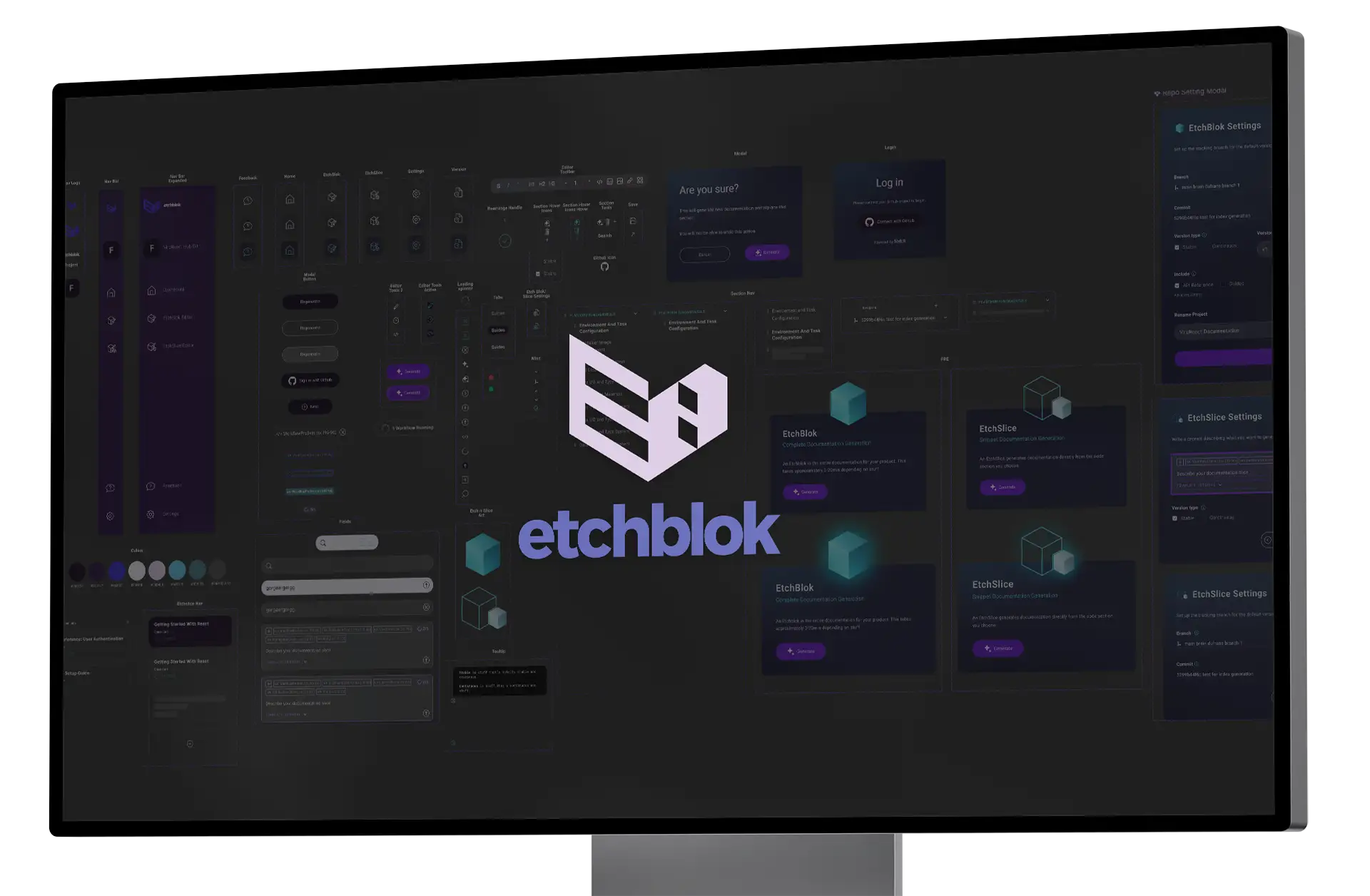
Etchblok.ai - Design Library of Components
As Lead Product Designer, I’m shaping etchblok from the ground up; designing a unified experience for three distinct power users: Product, Engineering, and Technical Writing. Balancing their needs required system-level thinking, workflow clarity, and ruthless prioritization.
By harnessing OpenAI, we designed an AI-assisted workflow that keeps humans in control of the decisions that matter, while etchblok handles the rest. The result is a faster, more trustworthy documentation pipeline that scales with the product and the organization.
Speed and cost define modern businesses, and time is the most expensive variable of all. Yet one of the most critical parts of building any platform documentation remains slow, manual, and chronically overlooked.
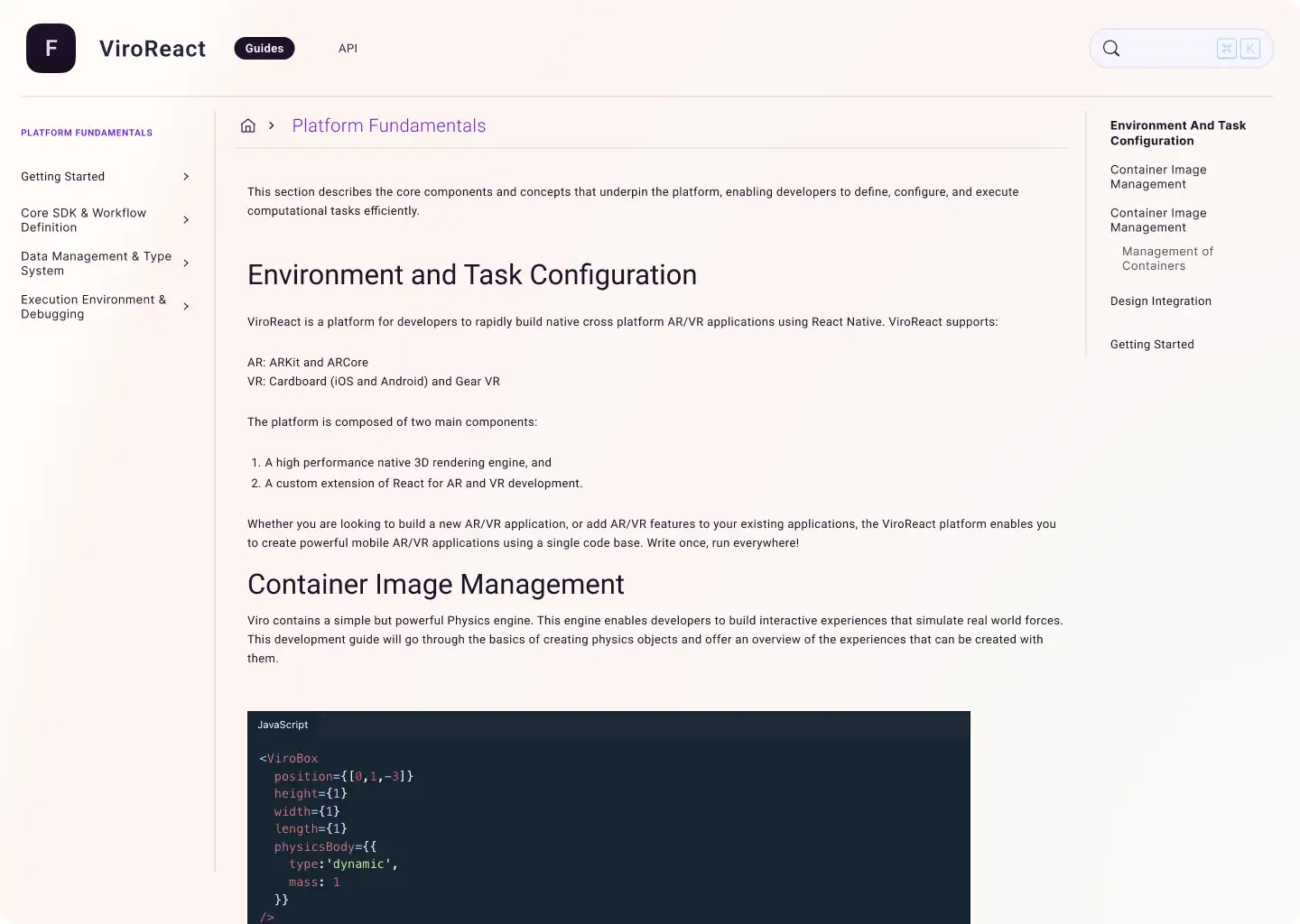
etchblok transforms this bottleneck. It generates end-to-end, publication-ready documentation directly from an entire codebase, delivering enterprise-grade speed, consistency, and control.
By 2011, UpNext Maps had gained momentum, becoming the official mapping partner for the NFL, Verizon, and Samsung. Our tech, design philosophy, and product traction caught Amazon’s eye....
Yet one of the most critical parts of building any platform documentation remains slow, manual, and chronically overlooked...
- Players can link their blockchain wallets to use their 10KTF-crafted NFT gear in Battle.town.
- Integrate social media channels to keep players engaged.
- Engaging in the game and community boosts reward opportunities.
- Acknowledge and reward the dedication and loyalty of our fans who have invested in our world and supported our product.
- Establish future opportunities and strategic partnerships to generate additional revenue streams
- Boost excitement and community engagement by hosting events and discussions that encourage players to share theories and predictions about the game's future, fostering anticipation and involvement.
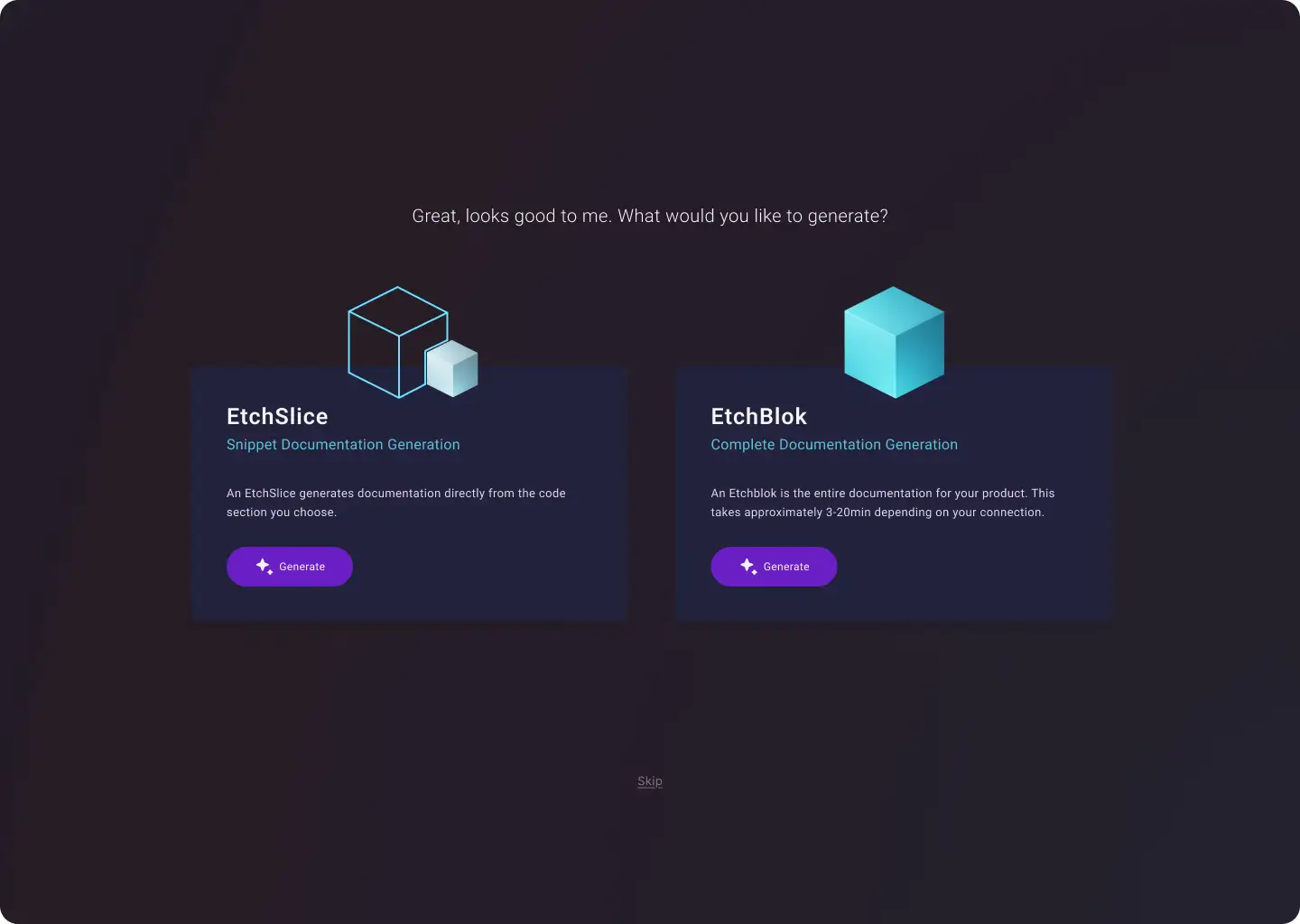
Conversational experience is an area in which AI currently excels. Would you like to generate documentation for a code snippet or the entire codebase?
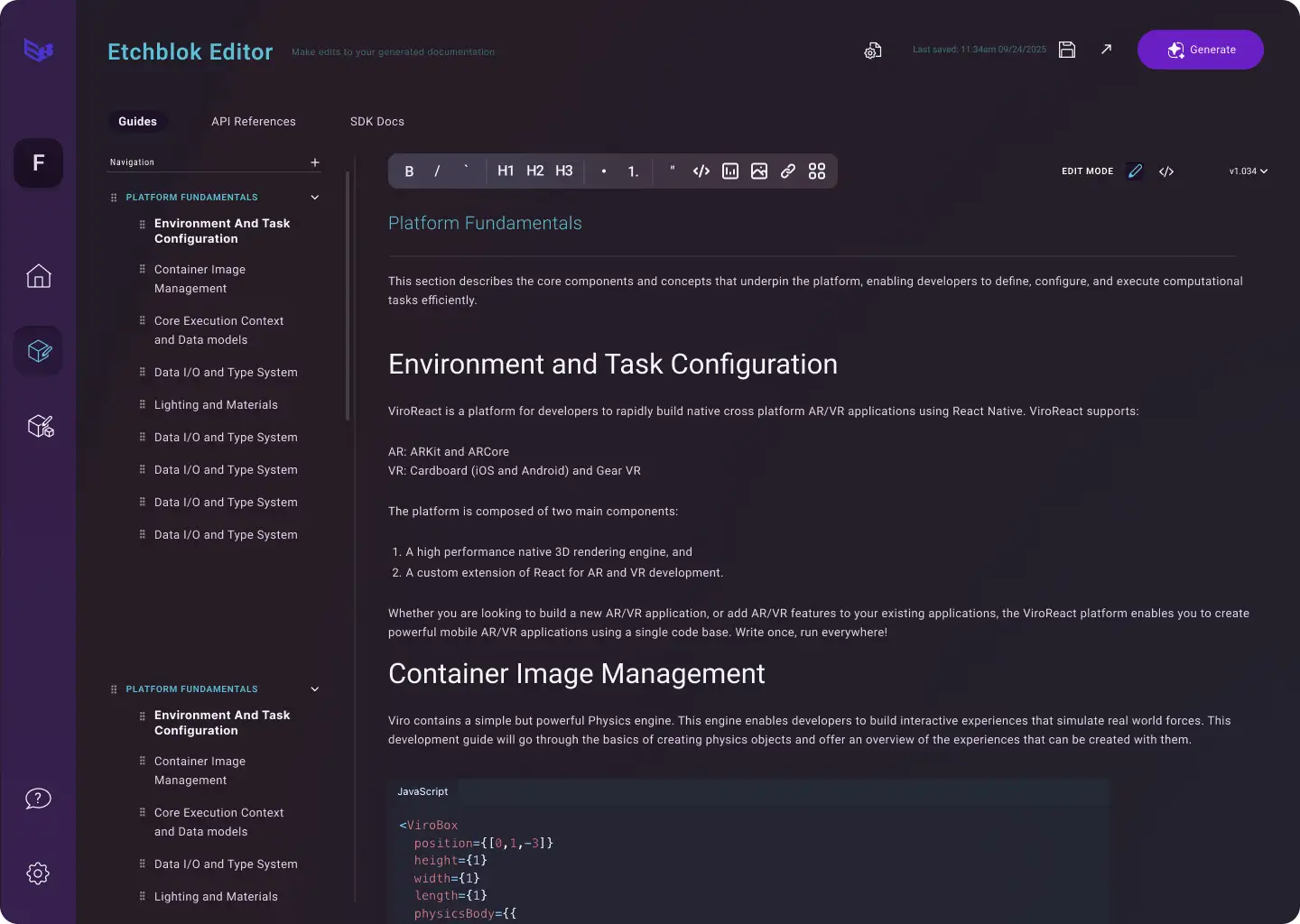
The etchblok Editor allows you to either accept or edit the generated documentation as you wish. The editor should be familiar to documentation writers. The end goal is to minimise interactions with the WYSIWYG editor and make the whole experience feel more natural by using speech or writing prompts.
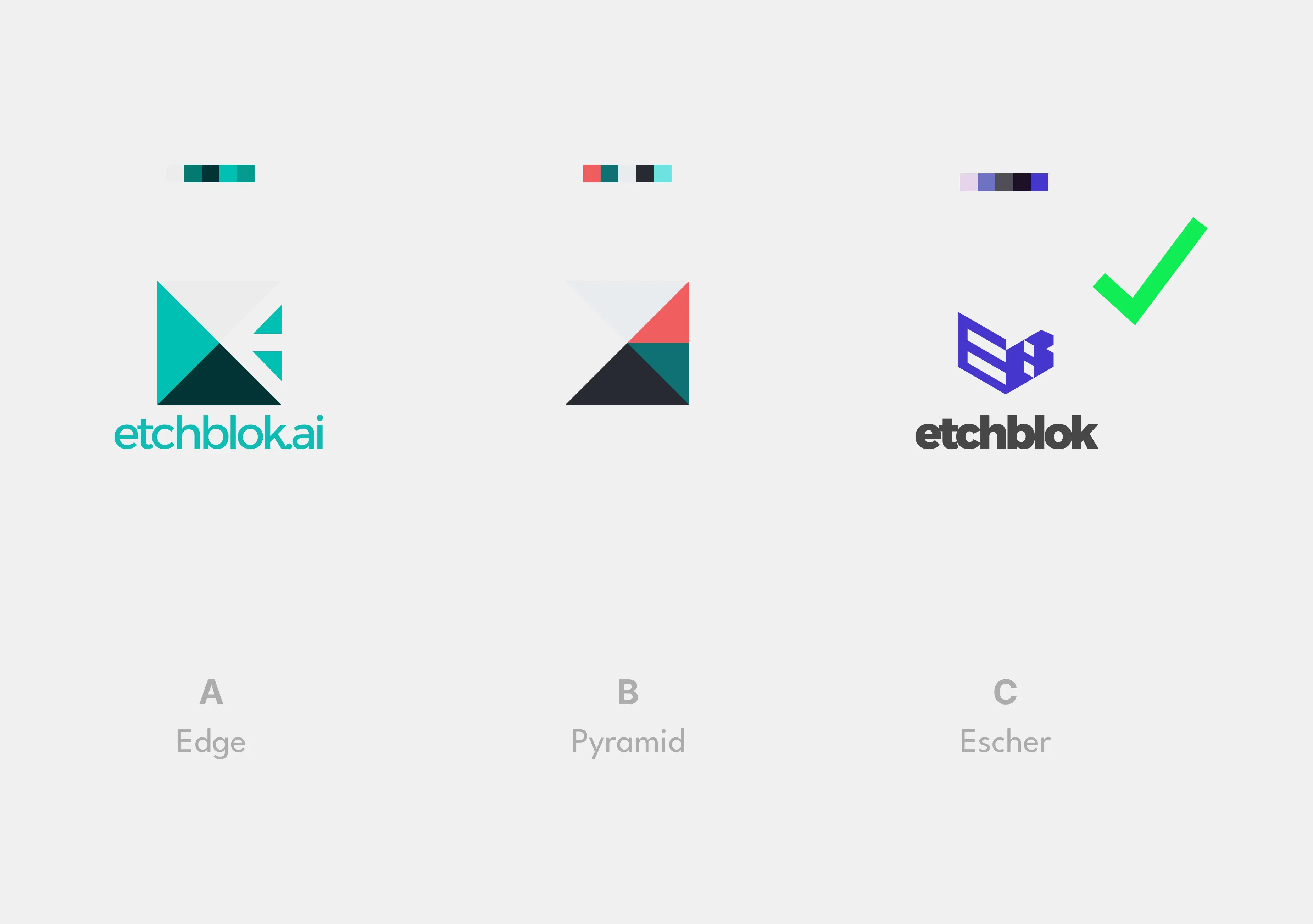
After wireframing the workflow journeys, I proceeded to design the product logo and brand elements. Ultimately, Option C, named 'Escher,' was selected as the final choice.
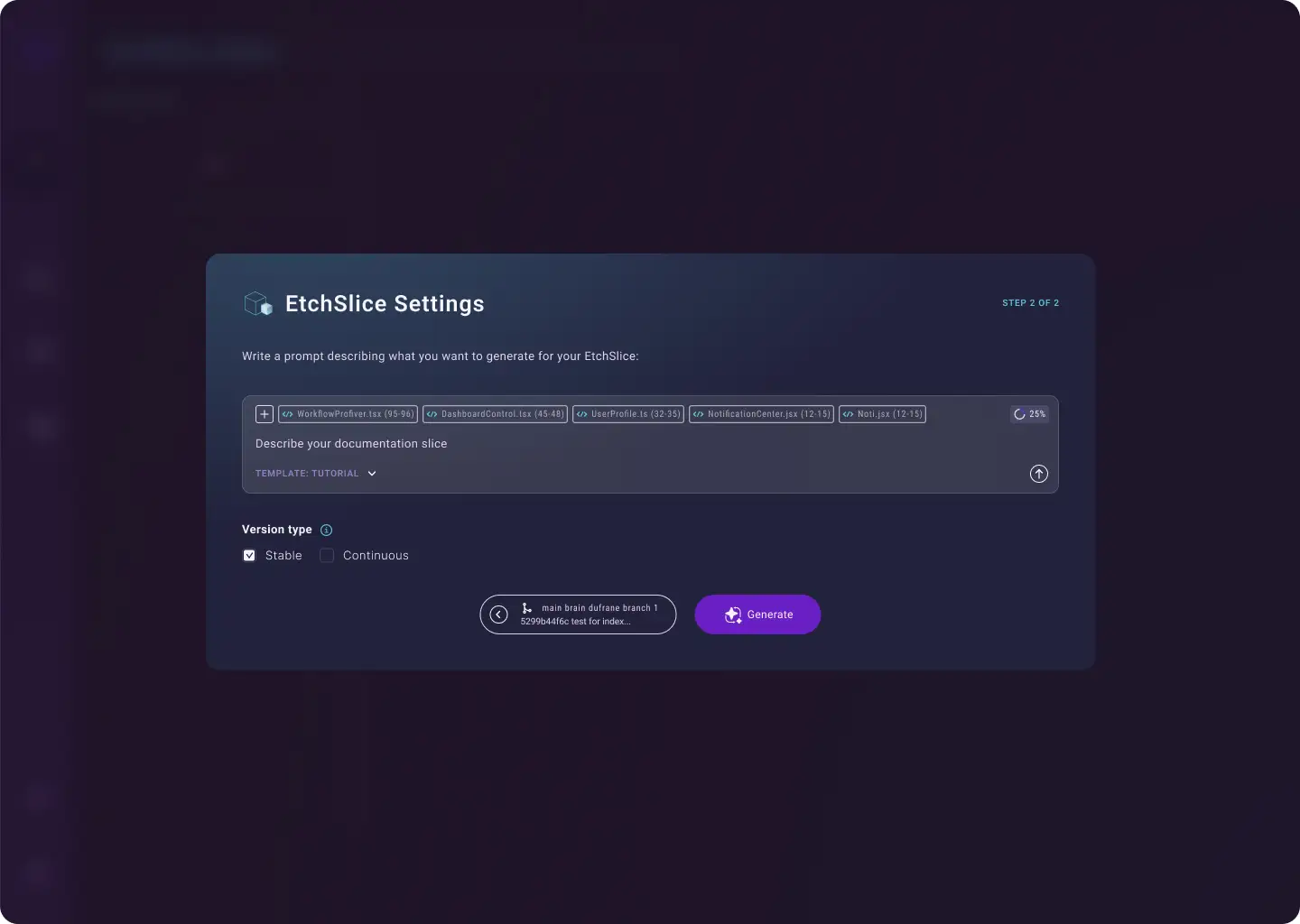
Like all intuitive product experiences, the main user journey is seamless and straightforward, with the option to delve deeper and modify what was generated.
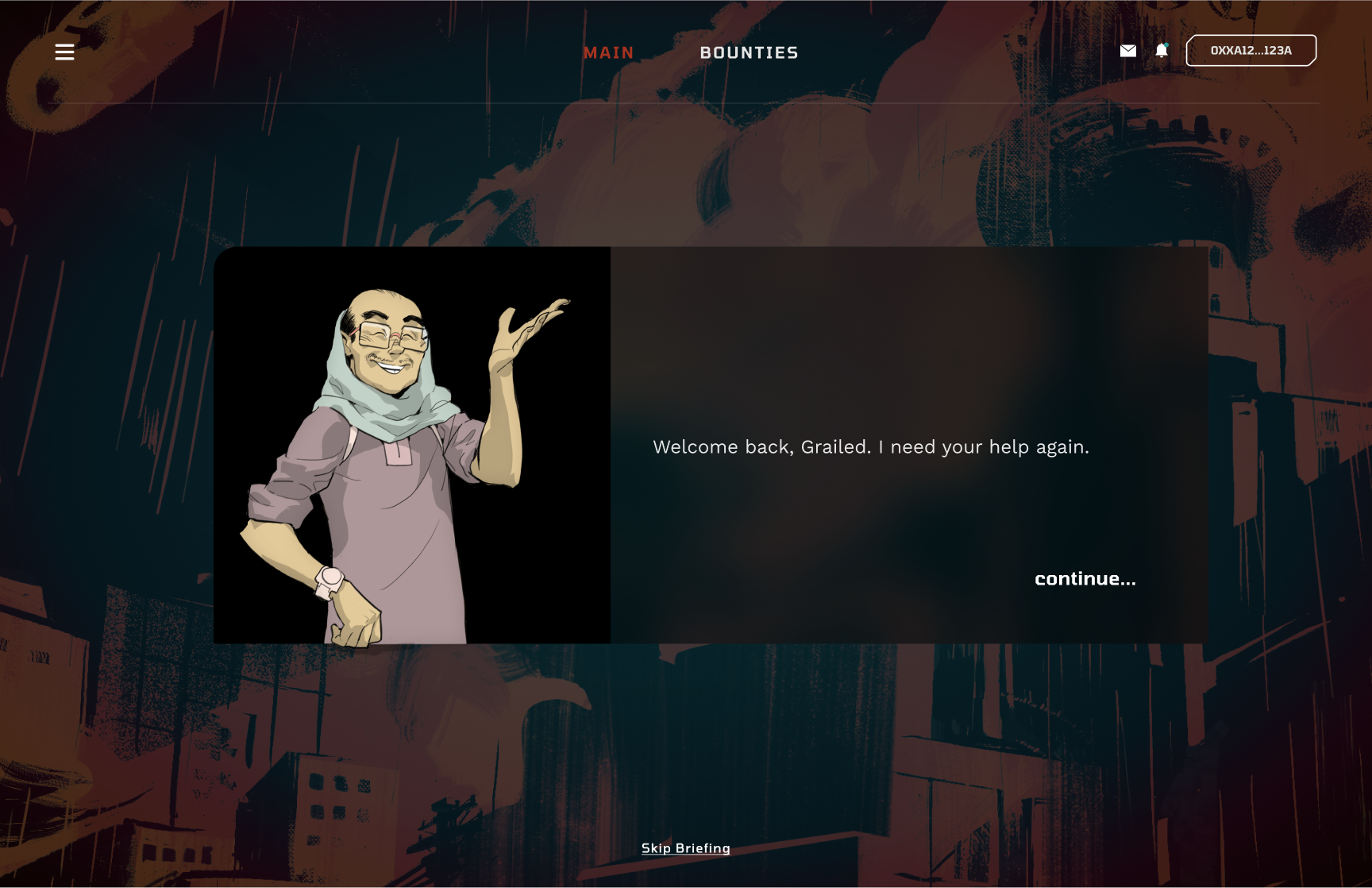
Wagmi-san is one of few main characters that gives the mission briefing.
Character Artwork by: Cromagnus
The journey of Amazon Maps took an unexpected turn with the early challenges faced by the Fire Phone. Initially launched as a pre-installed app on the phone, the disappointing sales led us to rethink our strategy. Instead of focusing on consumer-facing applications, we pivoted to enhance our Maps platform as a reliable navigation tool for Amazon Prime couriers. This shift allowed us to continue innovating and refining our technology until it was eventually phased out.
It generates end-to-end, publication-ready documentation directly from an entire codebase, delivering enterprise-grade speed, consistency, and control.
Working directly with Jeff Bezos in biweekly reviews (was scary at first), alongside a focused and driven team, pushed me beyond what I thought were my limits. While not every solution was flawless, our commitment to user-centric design consistently guided us in the right direction, even when unforeseen challenges arose.
It wasn’t just the product—maps—that fascinated me, but the depth of the problems it presented at scale, and the strategies developed to address them in a cohesive and interconnected manner. Solving them through purposeful, human-centered design gave me the confidence that I could take on any product, no matter how complex.
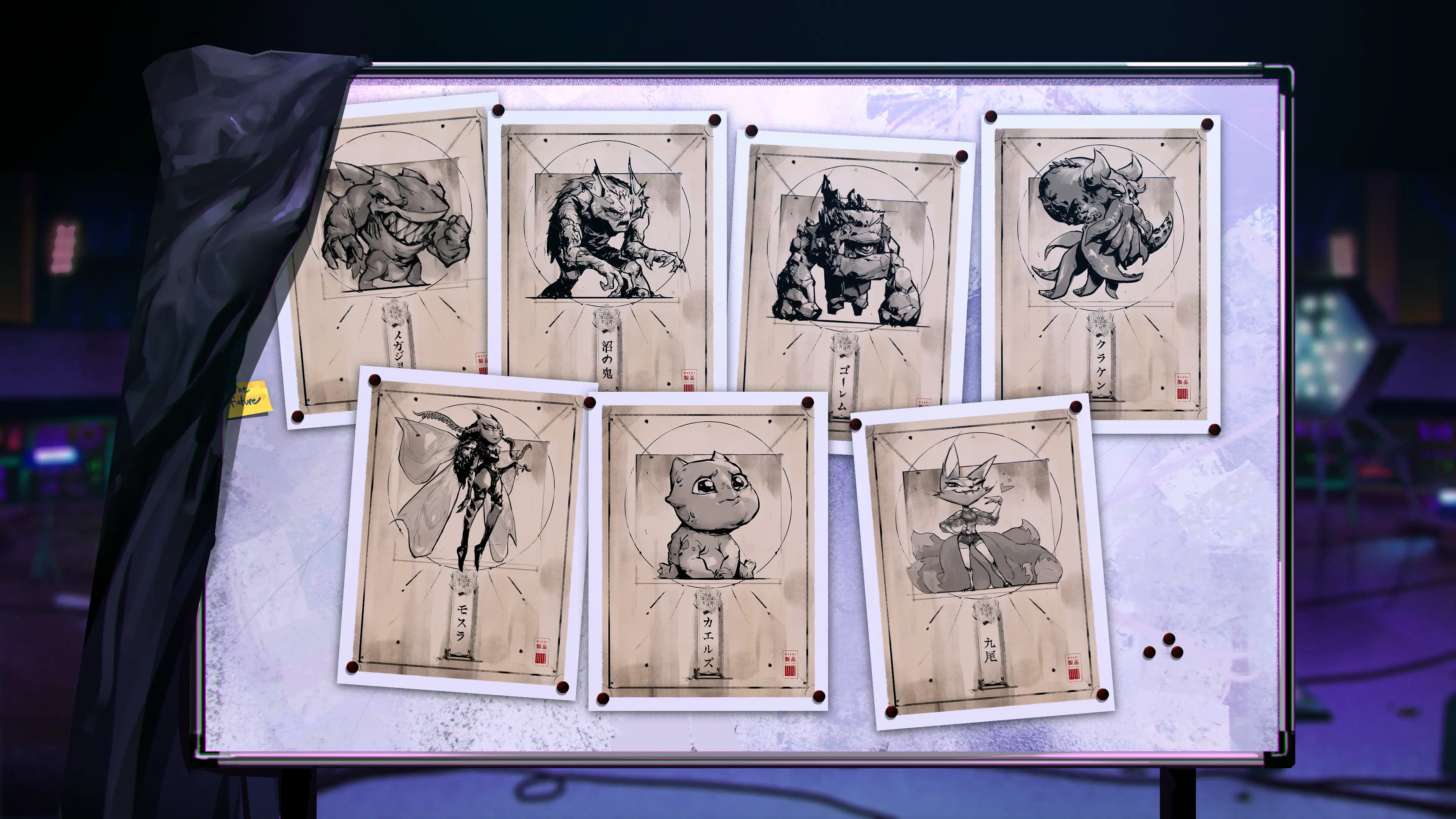
The Baby Kaiju classes were fully unveiled after months of anticipation. The community played Battle.town to earn points, aiming for the rarest opportunities available.
Artwork by: Robin Har
Character Designer: Timo Prousalis
Currently, etchblok.ai is invite-only.
There's so much more to share. Interested in discovering more about the challenges and outcomes?
